Easiest Lasagna Ever
This post may contain affiliate links. Please see our privacy policy for details.
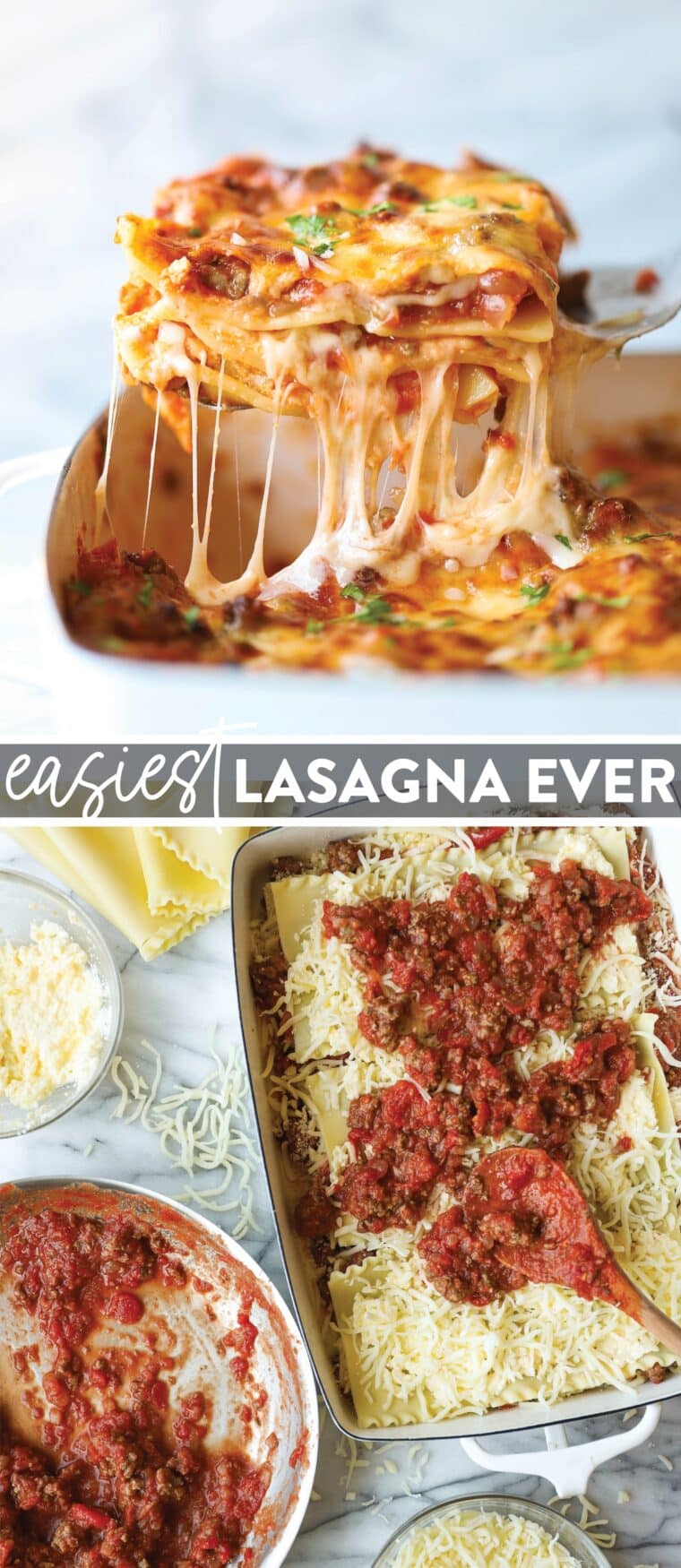
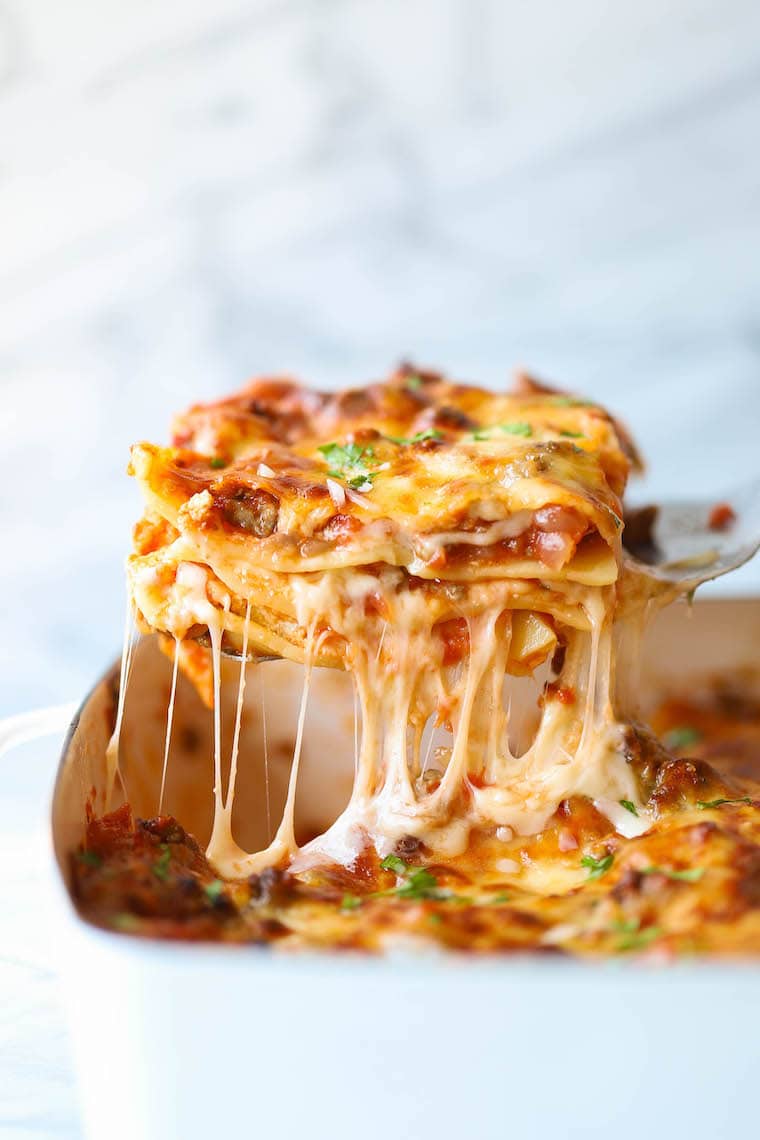
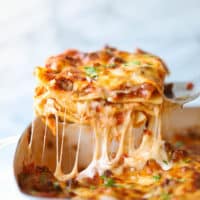
This classic homemade lasagna is so easy with a homemade meat sauce and layers of creamy ricotta! It’s also make-ahead and freezer-friendly.
Featured Comment
Why you’ll love this easy lasagna recipe
- A classic dish. With such simple ingredients using pantry staples – we’re talking homemade meat sauce layered with a mixture of ricotta and mozzarella cheese with tender lasagna noodles – this cozy, comforting classic delivers on all levels every single time.
- Makes for a great gift. Lasagna is very easy to double (making two pans), freeze, and gift to a new mom or neighbor. What’s the best way to gift lasagna? Assembled and uncooked.
- Reheats very well. Leftovers taste even better the next day as the flavors of the meat sauce and cheese continue to meld together. And an added bonus: it’s freezer-friendly!
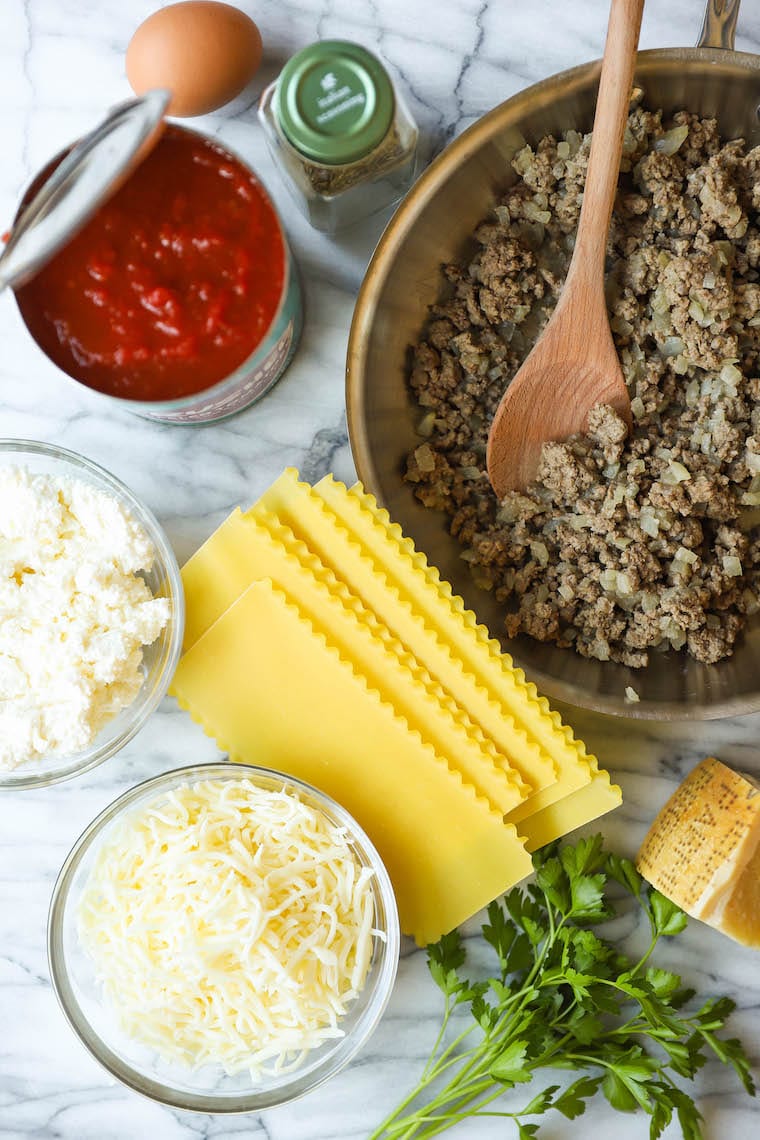
How to make classic lasagna
- Cook the pasta. Boil the lasagna noodles in generously salted water until al dente, about 8-10 minutes. Drain well and lay them flat to remove the excess moisture and to prevent them from sticking to one another. Skip this step if using no-boil lasagna noodles.
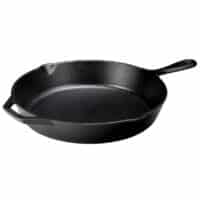
- Make the meat sauce. Brown the ground beef in a large cast iron skillet over medium high heat. Drain the excess fat and stir in the crushed tomatoes and Italian seasoning. Simmer, uncovered, for 10-15 minutes until it is thick and has no watery run-off.
- Prepare the ricotta cheese mixture. Combine the ricotta, mozzarella, and egg until smooth and well combined.
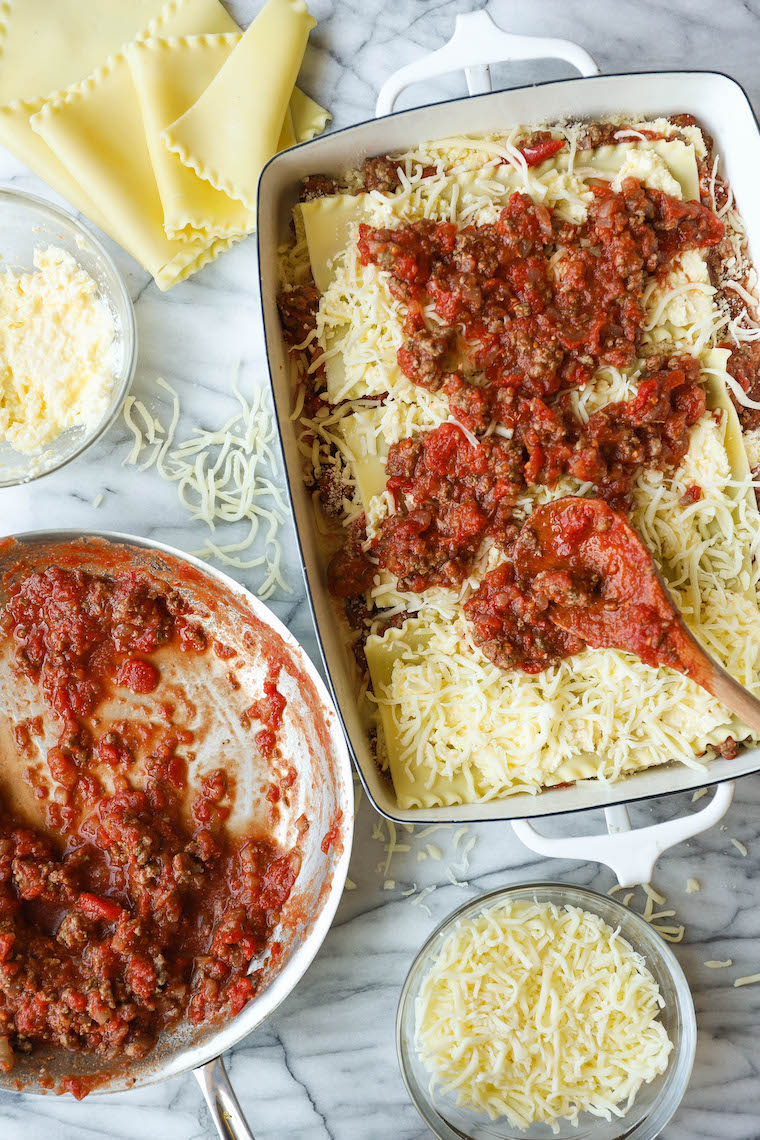
- Assemble the lasagna.
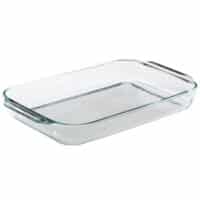
- Base: Coat a 9 x 13 baking dish with nonstick spray, then spread 1 cup of the meat sauce evenly across the bottom. This will serve as a barrier to prevent the noodles from sticking to the bottom, helping them cook evenly.
- Pasta layer: Add a layer of 3-4 cooked lasagna noodles (or no-boil lasagna noodles) side-by-side, avoiding any overlap.
- Cheese layer: Spread 1/2 of the ricotta mixture over the lasagna noodles in an even layer, then sprinkle 1 cup mozzarella cheese.
- Repeat: Spoon another layer of 1 1/2-2 cups meat sauce, then lasagna noodles, then ricotta and mozzarella cheese.
- Final layer: Add the last remaining lasagna noodles, covering with meat sauce, and sprinkle with mozzarella and Parmesan.
- Bake. Bake for 35-45 minutes until bubbling, covering with foil if it browns too quickly. Remove the foil, then broil for a few extra minutes for that extra crispy golden top.
- Serve. Let cool 15 minutes, garnishing with parsley and serving warm.
pro tip
Make the meat sauce the night before and store in the fridge overnight.
The flavors will deepen even further, and the thick chilled sauce will make assembly so much easier!
freezing and storage
Prep
To make ahead, cover lasagna tightly with plastic wrap; refrigerate up to 24 hours. To bake, let the lasagna sit at room temperature for 15-30 minutes. Remove plastic wrap and bake as directed.
Storage
Leftovers can be stored in an airtight container in the fridge for 2-3 days.
Reheating
Reheat in the oven at 350°F, covered in aluminum foil until warmed through, about 15-30 minutes.
Freeze before baking
Cover the lasagna tightly with plastic wrap, then aluminum foil. Label, date, and freeze up to 3 months. To reheat, thaw overnight in the fridge, remove the plastic wrap and bake as directed, adding a few more minutes of cook time as needed.
Freeze after baking
Let the lasagna cool completely; cover tightly with plastic wrap, then aluminum foil. Label, date, and freeze up to 3 months. To reheat, thaw overnight in the fridge and reheat in the oven at 350°F, covered in aluminum foil until warmed through, about 1 hour.
Tools For This Recipe
Easiest Lasagna Ever: Frequently Asked Questions
Absolutely! No-boil lasagna noodles are a convenient shortcut to cut down prep time even more. They just need to be completely covered in sauce to cook through properly.
Not at all! Italian pork sausage or ground turkey can be used instead of ground beef. Here is a turkey veggie version that I also love.
Yes! Feel free to use your favorite store-bought tomato sauce (I love Rao’s Roasted Garlic) in place of the crushed tomatoes and omitting the Italian seasoning.
The egg serves as a binding agent for the ricotta cheese mixture. You can certainly skip the egg if needed, leaving the ricotta a little runnier, but it should not compromise taste.
A well-structured lasagna starts with a protective layer of sauce, then noodles, then cheese, a repeat of layers (sauce, noodles, cheese), and then one final layer of noodles, sauce and a cheese-heavy top.
It’s important to remove the excess liquid from the ingredients before assembling the lasagna. For example, you’ll need to reduce the sauce, dry the lasagna noodles thoroughly, avoid fresh mozzarella, and allow the lasagna to rest prior to serving.
Yes, lasagna is very freezer-friendly! For the best results, we recommend assembling, freezing, then baking to help prevent any sogginess but if you’ve already baked your lasagna, no worries at all – it can still be frozen!
Easiest Lasagna Ever
Video
Ingredients
- 9 lasagna noodles
- 1 tablespoon olive oil
- 1 pound ground beef
- 1 onion, diced
- Kosher salt and freshly ground black pepper, to taste
- 1 (28-ounce) can crushed tomatoes
- 1 tablespoon Italian seasoning
- 1 (15-ounce) package whole milk ricotta
- 3 ½ cups shredded mozzarella cheese, divided
- 1 large egg, beaten
- ¼ cup freshly grated Parmesan
- 2 tablespoons chopped fresh parsley leaves
Instructions
- In a large pot of boiling salted water, cook lasagna noodles according to package instructions.
- Heat olive oil in a large cast iron skillet over medium high heat. Add ground beef and onion and cook until beef has browned, about 3-5 minutes, making sure to crumble the beef as it cooks; season with salt and pepper, to taste. Drain excess fat.
- Stir in tomatoes and Italian seasoning. Bring to a boil; reduce heat and simmer until thickened, about 10-15 minutes.
- In a medium bowl, combine ricotta, 1/2 cup mozzarella and egg; set aside.
- Preheat oven to 350 degrees F. Lightly oil a 9 x 13 baking dish or coat with nonstick spray.
- Spread 1 cup tomato mixture onto the bottom of a 9×13 baking dish; top with 3 lasagna noodles, 1/2 of the ricotta cheese mixture and 1 cup mozzarella cheese. Repeat with a second layer. Top with remaining noodles, tomato mixture, 1 cup mozzarella cheese and Parmesan.*
- Place into oven and bake for 35-45 minutes, or until bubbling. Then broil for 2-3 minutes, or until top is browned in spots. Let cool 15 minutes.
- Serve, garnished with parsley, if desired.
Notes
- Reduce the sauce. Gently simmer the meat sauce for 10-15 minutes (for a quick weekday version), stirring the pot occasionally to prevent sticking. The sauce should be thick, not watery. If it is too wet, the lasagna will be soggy. When time permits, simmer for 1-2 hrs, allowing the flavors to really meld and marry.
- Use no-boil lasagna noodles. To cut down on prep time even more, use no-boil lasagna noodles, making sure the noodles are completely covered in sauce prior to baking.
- Mix it up. This recipe uses ground beef for budget-friendly convenience but a mixture of lean ground beef and sweet Italian sausage should work very well here.
- Avoid fresh mozzarella. Use low-moisture, whole milk mozzarella cheese. Fresh mozzarella will have too much liquid, resulting in a watery lasagna.
- Cover with foil. If the lasagna is browning too quickly, cover with foil, spraying the foil with nonstick spray first so the cheese does not stick.
- Let it rest. Let the lasagna sit for 10-15 minutes. This will prevent the layers from sliding off, and will also make it easier to serve with less mess.
- Make ahead of time. Lasagna is a great dish to make ahead of time. Prep and assemble 1-2 days before, covered with aluminum foil and stored in the fridge.
- Freeze before baking. This will preserve the texture and prevent sogginess. Always use a freezer-safe baking dish, label, date and freeze up to 3 months.
Did you make this recipe?
Tag @damn_delicious on Instagram and hashtag it #damndelicious!
I don’t even know what it is about this recipe. It isn’t complicated, featuring an assorted variety of meats and cheeses, yet the taste and flavor are fantastic.
I feel that I can either make it the same, again and again, or occasionally tweak it for a change of pace.