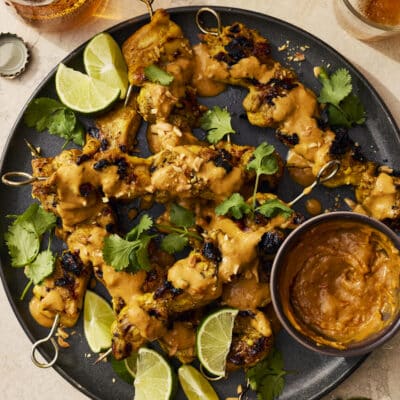
Chicken Satay with Peanut Sauce
Juicy, tender, flavorful chicken satay skewers just like your favorite Thai restaurant! Served with the creamiest (make-ahead) peanut sauce.
Ingredients
- ¼ cup coconut milk
- 2 tablespoons reduced sodium soy sauce
- 2 ½ teaspoons yellow curry powder, Indian or Madras curry powder
- 1 ½ teaspoons turmeric
- 3 cloves garlic, minced
- 1 tablespoon freshly grated ginger
- 1 tablespoon brown sugar
- 1 tablespoon fish sauce
- 2 pounds boneless, skinless chicken thighs, cut into 1-inch chunks
- 1 tablespoon canola oil
- Kosher salt and freshly ground black pepper, to taste
For the peanut sauce
- 3 tablespoons creamy peanut butter
- 1 tablespoon reduced sodium soy sauce
- 1 tablespoon freshly squeezed lime juice
- 2 teaspoons brown sugar
- 2 teaspoons chili garlic sauce, or more, to taste
- 1 teaspoon freshly grated ginger
Equipment
Instructions
- In a medium bowl, combine coconut milk, soy sauce, curry powder, turmeric, garlic, ginger, brown sugar and fish sauce.
- In a gallon size Ziploc bag or large bowl, combine chicken and coconut milk mixture; marinate for at least 2 hours to overnight, turning the bag occasionally. Drain the chicken from the marinade, discarding the marinade.
- Preheat grill to medium high heat. Thread chicken onto skewers. Brush with canola oil; season with salt and pepper, to taste.
- Add skewers to grill, and cook, turning occasionally, until the chicken is completely cooked through, reaching an internal temperature of 165 degrees F, about 12-15 minutes.
- Serve immediately with peanut sauce.
For the peanut sauce
- Whisk together peanut butter, soy sauce, lime juice, brown sugar, chili garlic sauce and ginger in a small bowl. Whisk in 2-3 tablespoons warm water until desired consistency is reached.
Notes
- Use full fat coconut milk. Although lite coconut milk can certainly be used, full fat coconut milk will yield more rich, intense, creamy coconut flavors while also tenderizing the chicken.
- Look for Indian or Madras curry powder. For authentic chicken satay flavors, opt for a standard yellow curry powder, also known as Indian or Madras curry powder. This is what creates that yellow, golden marinade base, mixed with coconut milk and turmeric.
- Fish sauce is a hero. Fish sauce is a key ingredient here, balancing out the flavors, and adding saltiness and umami without overpowering it. A little bit goes a long way.
- Chicken thighs will be more flavorful. While chicken breasts can certainly be used in chicken satay, chicken thighs have a higher fat content which will yield juicier, more flavorful chicken when cooked on the grill (and are much more forgiving without drying out!).
- Marinate 2 hours to overnight. Marinate the chicken for at least 2 hours, the minimum time for the coconut milk to start tenderizing the meat. Overnight, about 8-12 hours, is the sweet spot for maximum flavor and tenderness. Avoid marinating longer than 24 hours though - the acidic ingredients (lime juice) can start to break down the chicken, making it mushy.
- Choose between metal or wooden skewers. Metal skewers are sturdy and reusable but will retain heat, requiring tongs when handling. Wooden skewers are cheaper and disposable but need to be soaked in water overnight (or at least 30 minutes) prior to using as they can burn easily. Pro tip: soak an entire package of wooden skewers in a 9 x 13 baking dish overnight; drain well and freeze the wet skewers in an airtight, resealable freezer bag for the season.
- Let your meat rest. Let your chicken rest for at least 5 minutes prior to serving, allowing the juices to redistribute – this will allow for maximum flavor and juiciness.
- Reheat in the oven. Leftover chicken can be rubbery when reheated. For best results with leftovers, reheat in the oven at 350°F, covered in aluminum foil until warmed through.
- Make it gluten-free. Swap out the soy sauce both in the marinade and peanut sauce with gluten-free tamari or a certified gluten-free soy sauce. Always double check spices to ensure that they do not have hidden gluten ingredients.
- An outdoor grill is not necessary. Too cold to grill outside? A cast iron grill pan can be used to get those favorited grill marks and charred flavor. These can also be baked at 400°F for 15-20 minutes (reaching an internal temperature of 165°F), broiling the last 1-2 minutes of cook time for that signature char.
- Pick the right consistency for your peanut sauce. The peanut sauce is highly customizable, making it as thin or as thick as desired. Use about 2 tablespoons warm water for a thick dipping sauce, or use 3–4 tablespoons for a thinner drizzle. Always use warm water when adding as cold water can cause the peanut butter to seize up!
- Make the peanut sauce ahead of time. Cut down on prep time even further by making the peanut sauce 1 week ahead of time, stored in an airtight container in the fridge, letting it come to room temperature before serving.