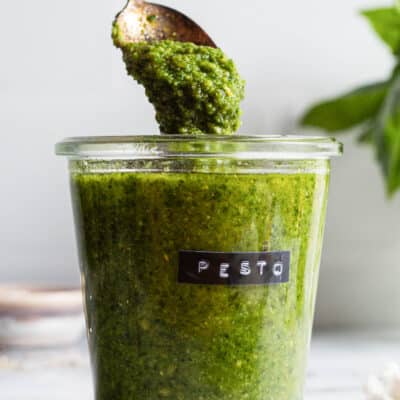
Easy Homemade Pesto
Say goodbye to store-bought pesto! This homemade version is so easy, so fresh, and so flavorful using only 5 ingredients (and 5 minutes prep).
Ingredients
- 1 cup fresh basil leaves, loosely packed
- 3 cloves garlic, peeled
- 3 tablespoons pine nuts
- ⅓ cup freshly grated Parmesan or Pecorino
- Kosher salt and freshly ground black pepper, to taste
- ⅓ cup extra virgin olive oil
Equipment
Instructions
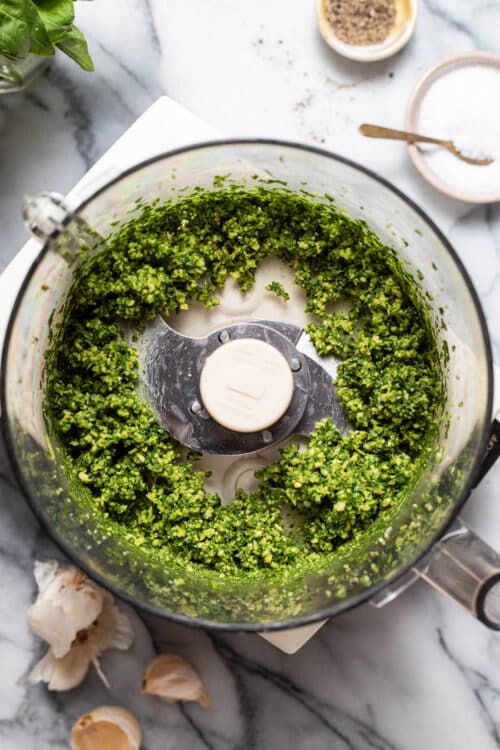
- To make the pesto, combine basil, garlic, pine nuts and Parmesan in the bowl of a food processor; season with salt and pepper, to taste.
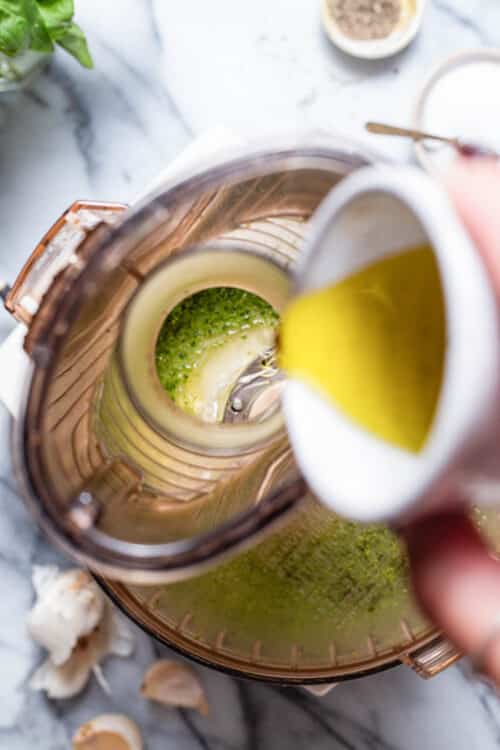
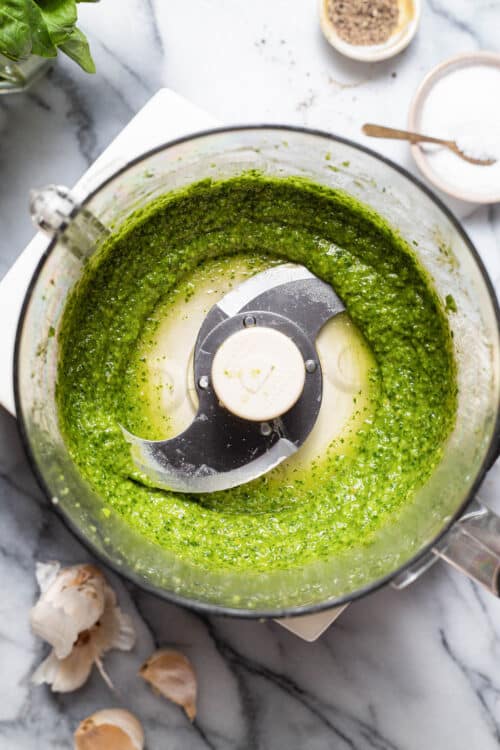
- With the motor running, add olive oil in a slow stream until emulsified; set aside.
- Store in an airtight container in the refrigerator for up to 1 week or freeze in ice cube trays up to 6 months.
Notes
- Always use fresh ingredients. Skip the jarred garlic (or garlic paste) and use freshly grated Parmesan or Pecorino for maximum flavor (and the vibrant green color of pesto).
- Dry the basil. Clean and dry the basil leaves thoroughly. Excess moisture will dilute the flavor of the pesto.
- Toast the pine nuts. For a richer flavor, toast the pine nuts in a dry skillet for 1-2 minutes.
- Make it budget-friendly. Pine nuts can be pricey. Swap out the pine nuts for more affordable nuts such as walnuts, almonds or even sunflower seeds.
- Use EVOO. Because pesto is a no-cook sauce, it is best to use a mild, high quality extra virgin olive oil. The EVOO is a key ingredient here, serving as an emulsifier to bind all the ingredients together.
- Slowly stream the olive oil. This is the secret to creating that thick, glossy, creamy pesto sauce, and will prevent the mixture from separating into a greasy sauce.
- Keep it green. Pesto can brown very quickly due to oxidation. Add a thin layer of olive oil on top of the pesto, covering with plastic wrap, when storing.
- Freeze in ice cube trays. Homemade pesto can keep in the freezer for up to 6 months! Freeze the leftover pesto in silicone ice cube trays with a small amount of olive oil on top (to prevent oxidation), transferring them to an airtight, resealable freezer bag once frozen solid. Toss the cubes (no thawing required) directly into hot drained pasta, soup (such as minestrone), or onto warm roasted vegetables.