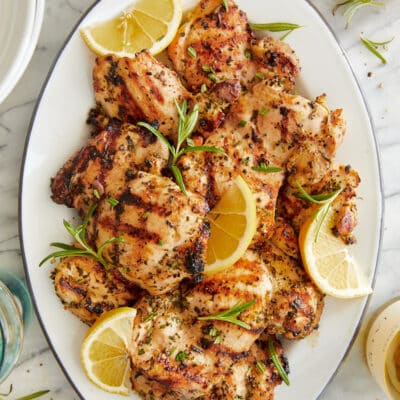
Tuscan Lemon Chicken
Juicy, tender chicken marinated in olive oil, lemon, rosemary, thyme and garlic. An easy, make-ahead recipe. Grill or cook on the stovetop!
Ingredients
- 3 tablespoons extra virgin olive oil, divided
- 1 shallot, diced
- 3 cloves garlic, minced
- 2 tablespoons chopped fresh parsley leaves
- 1 tablespoon chopped fresh rosemary
- 1 tablespoon chopped fresh thyme leaves
- 2 tablespoons freshly squeezed lemon juice
- 1 tablespoon lemon zest
- Kosher salt and freshly ground black pepper, to taste
- 2 pounds boneless, skinless chicken thighs
Instructions
- In a medium bowl, combine 2 tablespoons olive oil, shallot, garlic, parsley, rosemary, thyme, lemon juice, lemon zest, 1 teaspoon salt and 1 teaspoon pepper.
- In a gallon size Ziploc bag or large bowl, combine chicken and olive oil mixture; marinate for at least 2 hours to overnight, turning the bag occasionally. Drain the chicken from the marinade.
- Preheat grill to medium high heat.
- Brush chicken with remaining 1 tablespoon olive oil; season with salt and pepper, to taste.
- Add chicken to grill, and cook, turning occasionally, until chicken is completely cooked through, reaching an internal temperature of 165 degrees F, about 10 minutes.
- Serve immediately.
Notes
- An outdoor grill is not necessary. Too cold to grill outside? A cast iron grill pan can be used to get those favorited grill marks and charred flavor.
- Chicken thighs will be more flavorful. While chicken breasts can certainly be used, chicken thighs have a higher fat content which will yield juicier, more flavorful chicken when cooked on the grill (and are much more forgiving without drying out!).
- Preheat the grill. Ensure that the grill is properly cleaned (to prevent sticking) and preheated prior to grilling. This will allow for a better sear for those grill marks and evenly cooked chicken.
- Let the chicken come to room temperature. If the chicken has been marinating in the fridge, let the chicken sit at room temperature for 15-20 minutes prior to grilling. This will allow for even, uniform cooking edge to edge, keeping the meat much more juicy and tender.
- Work in batches. An overcrowded grill or pan can lead to uneven cooking and poor browning. Work in batches to maintain high heat for a good sear and crispy crust on each chicken.
- Use freshly squeezed lemon juice. While bottled lemon juice can work in a pinch, freshly squeezed is ideal here for its vibrant, stronger flavors.
- Marinate overnight. Let the chicken marinate overnight (or at least 2 hours). The longer it sits, the better, really letting the flavors meld and intensify. Avoid marinating longer than 24 hours though – the acidic ingredients (lemon juice) can start to break down the chicken, making it mushy.
- Use an instant-read thermometer for the most accurate results. The internal temperature should reach 165°F.
- Let your meat rest. Let your chicken rest for at least 5 minutes prior to serving, allowing the juices to redistribute – this will allow for maximum flavor and juiciness.
- Reheat in the oven. Leftover chicken can be rubbery when reheated. For best results with leftovers, reheat in the oven at 350°F, covered in aluminum foil until warmed through.
- Double the recipe. This is a great recipe to double as needed, saving the leftovers for salads, sandwiches, grain bowls and so much more.