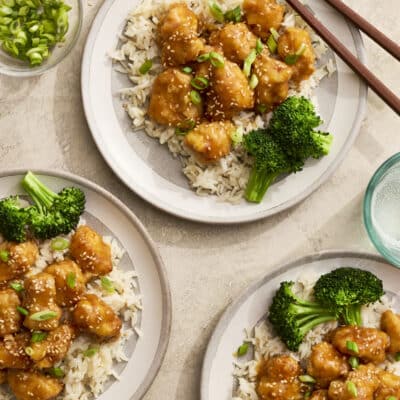
Chinese Orange Chicken
Crispy, golden brown chicken bites tossed in a sweet and tangy orange glaze! A Chinese takeout favorite (made so much better) right at home.
Ingredients
For the marinade
- 1 cup chicken broth
- 1 tablespoon orange zest
- ½ cup freshly squeezed orange juice
- ½ cup sugar
- ⅓ cup distilled white vinegar
- ¼ cup reduced sodium soy sauce
- 2 cloves garlic, minced
- 1 teaspoon Sriracha, or more, to taste
- ¼ teaspoon ground ginger
- ¼ teaspoon white pepper
- 1 ½ pounds boneless, skinless chicken breasts or thighs, cut into 1-inch chunks
For the cornstarch slurry
- 2 tablespoons cornstarch
- 2 tablespoons water
For the chicken
- 2 large eggs, beaten
- 1 cup cornstarch
- 2 cups vegetable oil
- ½ teaspoon sesame seeds
- 1 green onion, thinly sliced
Instructions
For the marinade
- In a large bowl, whisk together chicken broth, orange zest and juice, sugar, vinegar, soy sauce, garlic, Sriracha, ginger and white pepper.
- In a gallon size Ziploc bag or large bowl, combine chicken and 2/3 cup of the marinade; marinate for at least 30 minutes to 4 hours, turning the bag occasionally. Drain the chicken from the marinade, discarding the marinade.
For the cornstarch slurry
- In a small bowl, combine cornstarch and water.
For the orange sauce
- Heat remaining 1/3 marinade in a medium saucepan over medium heat. Bring to a boil; stir in cornstarch slurry. Cook, stirring frequently, until thickened and glossy, about 2-4 minutes; keep warm.
For the chicken
- Working one at a time, dip chicken into the eggs, then dredge in cornstarch, pressing to coat.
- Heat vegetable oil in a large cast iron skillet to 350°F. Working in batches, add chicken and cook until golden brown, about 3-4 minutes. Transfer to a paper towel-lined plate; discard excess oil.
- Serve chicken immediately, tossed or drizzled with the orange sauce, garnished with sesame seeds and green onion, if desired.
Notes
- Cut the chicken into similar-sized pieces. Whether you're using chicken breasts, thighs or tenderloins, dice the chicken into similar bite-sized pieces (about 1-inch chunks) for even, consistent cooking throughout.
- Use a cast iron skillet. A heavy bottomed skillet such as a cast iron skillet or Dutch oven has exceptional heat retention, ideal for even cooking and yielding perfectly crispy, evenly browned, juicy chicken.
- Use reduced sodium soy sauce. Reduced sodium has less sodium and less salt without compromising flavor.
- Freshly oranges go a long way. While bottled orange juice can work in a pinch, the orange zest and freshly squeezed orange juice are ideal here for its vibrant, stronger flavors.
- Avoid marinating for too long. The high acid content from the orange juice can break down the meat fibers if marinated for too long. Marinate the chicken for 2 to 4 hours.
- Check the temperature. Use a clip-on deep-fry thermometer to maintain a consistent oil temperature (about 325-375°F). If the oil goes past 375°F, the exterior will burn before the inside of the chicken is cooked, and if the oil is too cool, the chicken will absorb most of the oil, resulting in soggy, greasy chicken.
- Cook in batches. Cook the chicken in multiple batches as needed to avoid an overcrowded pan. An overcrowded pan will result in a drop in temperature, yielding soggy chicken bites instead.
- Mix cornstarch with water. Combining the cornstarch with water first (also known as a cornstarch slurry) will prevent lumps in the sauce, ensuring a smooth, glossy consistency and even thickening for the orange sauce.
- Sauce just before serving. This is crucial to avoiding soggy orange chicken. Toss the cooked chicken with the orange sauce right before serving for maximum crispness.
- Add garnishes. Make it restaurant-quality (especially when weekend company is over) by adding simple garnishes such as orange zest, sesame seeds and green onions.
- Prepare for leftovers. Store the chicken and the sauce separately if preparing for leftovers to preserve the crisp texture of the chicken.