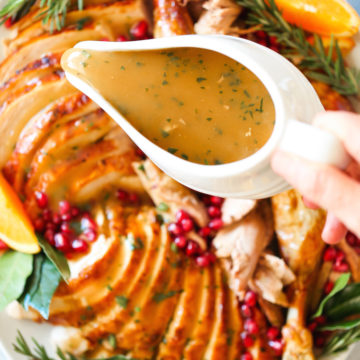
How to Make the Best Turkey Gravy
This turkey gravy is simply the best! Perfect for your Thanksgiving turkey using up all the pan drippings. Rich, velvety smooth, and so easy!
Ingredients
- Pan drippings from Easy Thanksgiving Turkey
- ¼ cup unsalted butter
- ¼ cup all-purpose flour
- 2 teaspoons chopped fresh thyme
- 1 tablespoon chopped fresh parsley leaves
- Kosher salt and freshly ground black pepper, to taste
Equipment
Instructions
- Strain pan drippings through a fine-mesh sieve; discard solids and reserve 2 1/2 cups pan drippings; set aside.
- Melt butter in a medium saucepan over medium heat. Whisk in flour and thyme until lightly browned, about 1 minute.
- Gradually whisk in reserved pan drippings. Bring to a boil; reduce heat and simmer, whisking constantly, until thickened, about 5-10 minutes.
- Stir in parsley; season with salt and pepper, to taste.
- Serve warm.
Notes
- Pan drippings is key. Gravy can be made with or without pan drippings, but pan drippings will add maximum flavor to your turkey gravy.
- Separate the fat. Strain the turkey pan drippings through a strainer or fat separator to prevent a greasy, separated gravy.
- Deglaze the pan (optional). If the roasting pan from the turkey has a lot of browned bits stuck to the bottom, set the pan over medium heat and add a splash of water, stock, or white wine. Then use a wooden spoon to lift up all the caramelized bits (fond) before adding to the reserved pan drippings.
- Use good quality stock. If you do not have enough pan drippings from your turkey, you can add chicken or turkey stock to make up for the difference. But your gravy is as good as your stock! Use good-quality or homemade stock for the best results.
- Fresh herbs are best. Although you can certainly substitute dried herbs, fresh herbs are ideal here, delivering the best kind of flavor. This is also a great time to use up all the leftover herbs from your holiday turkey.
- Cook the roux. Whisk in the flour until it turns light golden-brown to eliminate the raw flour taste.
- Whisk constantly. Whisking constantly is key here for a lump-free gravy.
- Freeze as needed. Let the gravy cool completely before transferring to individual freezer bags (or ice cube trays). Label, date, and freeze up to 3 months. To reheat, thaw overnight in the fridge and gently reheat on the stovetop until warmed through.