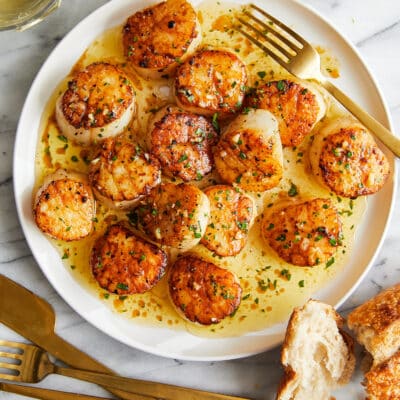
Lemon Butter Scallops
All you need is 5 ingredients + 10 minutes for the most amazing, buttery scallops ever. So easy, so simple, so fancy!
Ingredients
- 1 tablespoon unsalted butter
- 1 pound sea scallops
- Kosher salt and freshly ground black pepper, to taste
For the lemon butter sauce
- 2 tablespoons unsalted butter
- 3 cloves garlic, minced
- 3 tablespoons freshly squeezed lemon juice
- Kosher salt and freshly ground black pepper, to taste
- 2 tablespoons chopped fresh parsley leaves
Equipment
Instructions
- Melt butter in a large cast iron skillet over medium high heat.
- Remove the small side muscle from the scallops, rinse with cold water and thoroughly pat dry.
- Season scallops with salt and pepper, to taste. Working in batches, add scallops to the skillet in a single layer and cook, flipping once, until golden brown and translucent in the center, about 2 minutes per side. Set aside and keep warm.
for the lemon butter sauce
- Melt butter in the skillet. Add garlic and cook, stirring frequently, until fragrant, about 1 minute. Stir in lemon juice; season with salt and pepper, to taste.
- Serve scallops immediately with lemon butter sauce, garnished with parsley, if desired.
Notes
- Use a cast iron skillet. A cast iron skillet retains heat exceptionally well, allowing for a deep, golden brown crust on the scallops before the insides become overcooked.
- Prep the scallops. Although safe to eat, gently peel away the small side muscle from the scallops as it is tougher and chewier than the rest of the scallops. Rinse and pat dry to remove as much excess moisture as possible.
- Use dry scallops. Dry scallops are generally preferred over wet scallops as the latter is treated with preservatives, retaining excess water, and will not caramelize properly with a golden brown, crusty sear.
- Cook in batches. Overcrowding the pan will lead to poor searing and chewy, rubbery scallops.
- Serve as an appetizer or main course. Plan for 1-2 scallops per person when serving as an appetizer, and 3-5 scallops per person when serving as a primary protein, pairing with risotto or vegetables.
- Reheat in the oven. Leftover scallops can be rubbery when reheated in the microwave. For best results with leftovers, reheat in the oven at 200°F, covered in aluminum foil, until warmed through.