


Spaghetti Aglio e Olio


This post may contain affiliate links. Please see our privacy policy for details.

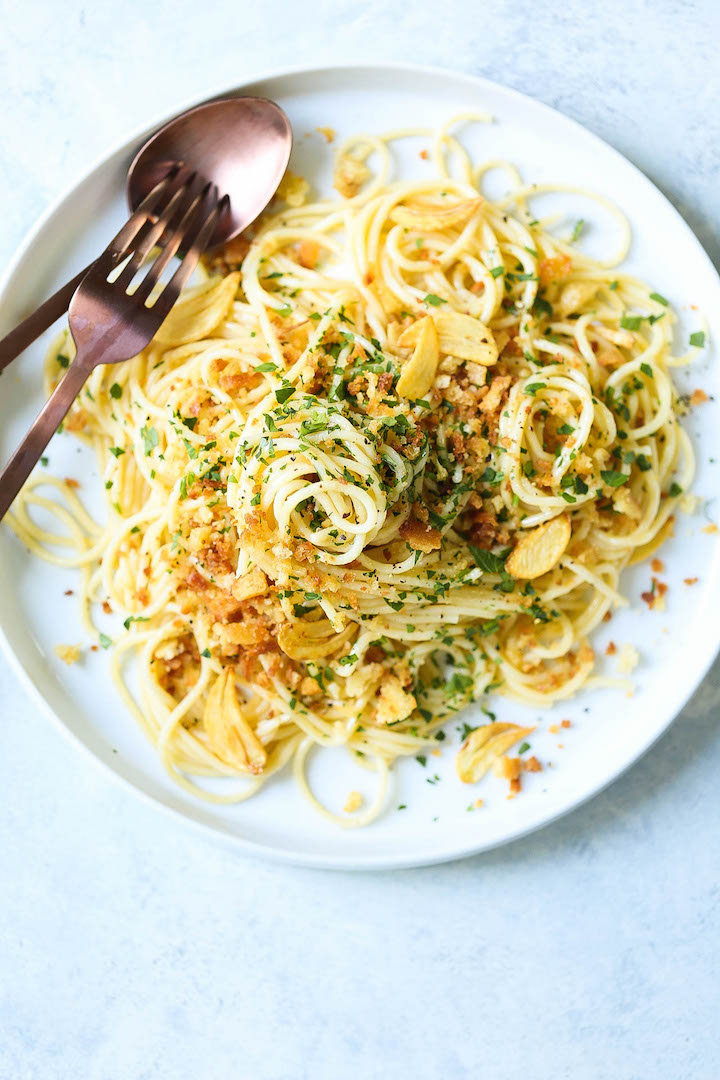
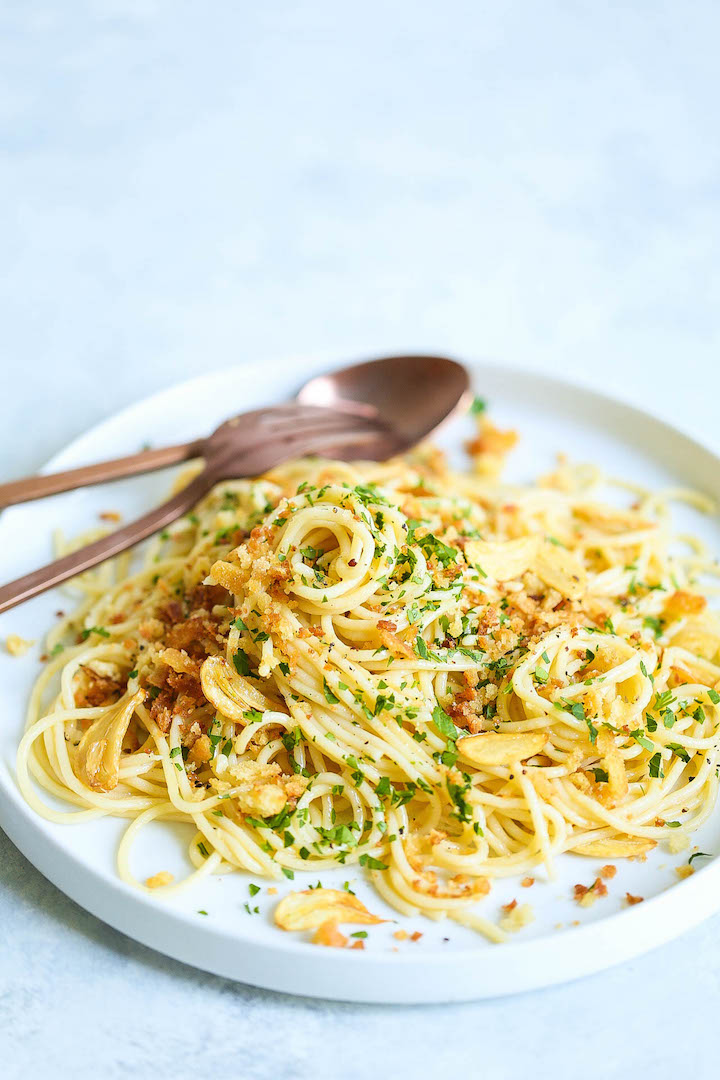
Spaghetti with garlic and olive oil! A weeknight hero (30 min meal) with pasta, breadcrumbs, garlic and Parmesan. So easy and budget-friendly!
Featured Comment
why you’ll love This Spaghetti Aglio e Olio Recipe
- Weeknight superhero. Whip up a restaurant-quality pasta dish in just 30 minutes start to finish! It’s speedy enough for busy weeknights (or a quick lunch or late night snack) yet fancy enough for weekend company or date night.
- Ultimate pantry meal. This elegant, low-effort dish comes from just a handful of easy-to-find pantry staples – pasta, olive oil, breadcrumbs, garlic, and Parmesan.
- Favorited comfort food all around. Aglio e olio is Italian comfort food that is so simple yet so flavorful just by combining starchy pasta water with olive oil and creating a rich, creamy sauce (without cream or butter!) that clings so effortlessly to the pasta – a crowd-favorite loved by all, even the little ones!
What Is Spaghetti Aglio e Olio?
Algio e olio translates to garlic and oil. It is a classic inexpensive Italian pasta dish, originating from Naples, Italy, made with pantry staples such as spaghetti, garlic, olive oil, salt, and pepper.
How to make Spaghetti Aglio e Olio
- Cook the pasta. Boil the pasta in salted water just until al dente, reserving 1 cup pasta water and draining well. Salt the pasta water generously so the spaghetti can absorb the flavor inside out.
- Toast the breadcrumbs. Toast the French-style breadcrumbs in a large cast iron skillet over medium heat. French-style breadcrumbs are a great way to use up leftover baguette or a rustic loaf, yielding incredibly light, textured crumbs for alglio e olio (instructions below).
- Sauté the aromatics. Cook the garlic and red pepper flakes (or calabrian chili flakes) until the garlic is golden, watching carefully so the garlic does not burn.
- Add the pasta and emulsify. Add the pasta, Parmesan and 1/2 cup reserved pasta water, stirring constantly and vigorously until the sauce has thickened and clings to the pasta. Pro tip: stir in 1 tablespoon butter for added richness.
- Serve. Serve warm, topped with toasted breadcrumbs and garnished with parsley and additional Parmesan.
How to make French-style breadcrumbs
- Tear the leftover stale French bread into small, equal-sized chunks, about 1-2 inches (if the bread is not stale, let it sit out for 1-2 days).
- Place the torn bread pieces into a food processor and pulse in 5-10 second bursts until the desired crumb consistency is reached, working carefully not to over-pulse (or it will become powdery).
Olive Oil vs. Extra Virgin Olive Oil
Olive oil
Much less expensive than extra virgin olive oil, olive oil is made from a blend of pure, cold-pressed olives and processed oils (oils that have been treated with chemicals or heat). Olive oil will have a milder, more neutral taste.
Extra virgin olive oil
Extra virgin olive oil is unrefined (not exposed to chemical or heat treatment), and is the least processed form of olive oil. With more olive taste, this is the highest grade of olive oil.
What kind of olive oil should I use for aglio e olio?
Use high quality extra virgin olive oil as it serves as a primary flavor component for aglio e olio. Extra virgin olive oil will also bind easily with the starchy pasta water for emulsification, creating that velvety, glossy sauce that coats every noodle.
What to Serve with Spaghetti Aglio e Olio Recipe
Essential Tools for Making Spaghetti Aglio e Olio
Large cast iron skillet
Spaghetti Aglio e Olio: Frequently Asked Questions
Linguine or fettuccine are both great alternatives. These pastas work perfectly with the garlic and olive oil sauce, and are easy to swap in for spaghetti. If you prefer, you can also try gluten-free pasta.
French-style breadcrumbs are made from crusty French bread (instructions above), yielding a higher crust-to-crumb ratio. This type of breadcrumb adds a great crunch to aglio e olio, enhancing its texture and flavor.
Because the sauce is made with such few ingredients, use fresh garlic, slicing the garlic paper-thin, for the best possible flavor.
Pre-packaged shredded cheese often contains anti-caking agents, which can cause it to clump when melting. For smoother results, always use freshly grated Parmesan or Pecorino Romano cheese, adding it a handful at a time.
Leftovers can be stored in an airtight container in the fridge for 2-3 days. When reheating, simply add a splash of water or extra olive oil to keep the pasta moist and prevent it from drying out.
Spaghetti Aglio e Olio
Video
Ingredients
- 8 ounces spaghetti
- 6 tablespoons extra-virgin olive oil, divided
- 1 cup fresh French-style breadcrumbs
- Kosher salt and freshly ground black pepper, to taste
- 4 cloves garlic, thinly sliced
- ¼ teaspoon crushed red pepper flakes, optional
- 1 cup freshly grated Parmesan, divided
- 2 tablespoons chopped fresh parsley leaves
Instructions
- In a large pot of boiling salted water, cook pasta according to package instructions; reserve 1 cup water and drain well.
- Heat 2 tablespoons olive oil in a large cast iron skillet over medium heat. Add breadcrumbs and cook, stirring, until browned and toasted, about 3-5 minutes; season with salt and pepper, to taste. Set aside.
- Heat remaining 4 tablespoons olive oil in the skillet. Add garlic and red pepper flakes, and cook, stirring frequently, until garlic is golden, about 2-3 minutes.
- Add pasta, 3/4 cup Parmesan and 1/2 cup reserved pasta water.
- Increase the heat to medium high heat. Cook, stirring constantly, and add remaining pasta water as needed, 1 tablespoon at a time, until the cheese has melted and the desired consistency is reached.
- Serve immediately with breadcrumbs, garnished with remaining Parmesan and parsley, if desired.
Equipment

Notes
- Salt the pasta water. Salting the pasta water will season the pasta from the inside out, allowing the pasta to absorb the salt while cooking. The general rule of thumb is to use at least 1 1/2 tablespoons of salt per pound of pasta.
- Use good quality extra virgin olive oil. With its short ingredient list of mainly olive oil and garlic, good quality extra virgin olive oil is best. Poor quality olive oil can yield bland aglio e olio.
- Slice the garlic, not mince. Thinly slice the garlic for sweet, nutty flavors. Mincing the garlic will lead to harsher, more pungent flavors.
- Avoid browning the garlic too much. The key is a perfect golden brown. Burning the garlic can result in bitter flavors.
- Add a kick of heat. Crushed red pepper flakes will add a depth of flavor and a little bit of subtle heat to your pasta. Pro tip: add calabrian chili flakes instead of crushed red pepper flakes for more fruity, smoky, rounded flavors with some noticeable heat.
- Freshly grated cheese goes a long way. Always add your cheese, a handful at a time, to avoid clumping.
- Pasta water serves as a binder. To create a silky, glossy sauce, add hot starchy pasta water, tossing the pasta constantly. This will force the oil and water to emulsify to become a rich, creamy sauce, coating the noodles perfectly.
- Add a touch of butter. Stir in 1 tablespoon butter to the pasta for added richness.
- French-style breadcrumbs provide the ultimate crunch. These breadcrumbs, also known as the “poor man’s Parmesan” using breadcrumbs for grated cheese, are coarser and lighter, yielding a much higher crust-to-crumb ratio for a rustic crunch to pair beautifully with the silky, garlicky spaghetti noodles.
- Add garnishes. Garnishes are always optional but a fresh sprinkle of parsley or some Parmesan will certainly take your pasta to the next level, adding more flavor, texture and contrast.
- Mix it up. Add your favorite protein (chicken or shrimp), vegetables (mushrooms, broccoli or onion), or fresh herbs.
- Reheat with a splash of water or olive oil. This will keep the pasta moist and prevent it from drying out.
Did you make this recipe?
Tag @damn_delicious on Instagram and hashtag it #damndelicious!

NO cheese, …no lemon… use anchovies ( 1 can for added flavor) Italian bread crumbs if you like.
In step 3 above, heat the olive il and garlic togther, when the garlic cloves just start to redden and the entire can of anchovies along with their olive oil, and keep stirring so that the anchovies separate and cook in the oil. Add to drained pasta. Add the bread crumbs if you must. Sprinkle with minced Italian parsley.
Chungah, William who is staying with us from Italy, says this is one of their go to meals when they are having a busy day. I’m going to make this recipe for him.
Let me know how he likes it – he’d be the true critic, right? 🙂
Italian parsley, correct?
Yes, that is correct.
I love this, it’s one of my favorite things to make on a busy weeknight. I have never tried putting pasta water in the sauce though and can’t wait to try!
Can you substitute Italian breadcrumbs?
Yes.
Do I remove the breadcrumbs before I brown the garlic , if not, won’t it burn if I cook it twice?
Yes, you are completely right. The breadcrumbs should be set aside.
maybe a little lemon zest?
Yes!
Leave out the breadcrumbs, add anchovies.
…and you have my version from when I was a kid. Anchovies- New England, specifically Azorean Portuguese
How much anchovies would you add?
what is French Style Breadcrumbs
French style breadcrumbs are breadcrumbs from French bread.