


Easy Homemade Pesto


This post may contain affiliate links. Please see our privacy policy for details.

Say goodbye to store-bought pesto! This homemade version is so easy, so fresh, and so flavorful using only 5 ingredients (and 5 minutes prep).

Featured Comment
Why you’ll love this easy homemade pesto recipe
- Vibrant and so fresh. Say goodbye to store-bought pesto! We’re talking unbeatable freshness with freshly blended basil leaves, garlic, pine nuts, Parmesan and olive oil.
- Requires zero cooking. No need to turn on a stovetop or oven here. With the help of a food processor, simply pulse and blend a handful of fresh ingredients to create a ready-to-use sauce to elevate any dish. The best part? You can make it as runny or chunky as you’d like.
- Great way to repurpose leftover or extra basil. We have zero waste here! Use up that leftover basil before it goes bad.
- Flexible and versatile. Homemade pesto is incredibly flexible, versatile and forgiving. Swap out the basil leaves for different herbs or use almonds or walnuts in place of the pine nuts. Pesto also works beautifully not just with pasta but for sandwiches, pizzas and roasted vegetables.
- Freezer-friendly. Pesto freezes so well! And having some saved up in your backpocket is always a life saver for those busy weeknights. All you have to do is cook up some pasta, stir in the pesto (no thawing required) and sprinkle on some freshly grated Parmesan. Done and done.
What is pesto?
Pesto is a fresh Italian sauce typically made with 5 ingredients – basil, garlic, nuts (traditionally pine nuts), Parmesan and extra virgin olive oil. It is incredibly versatile, and is commonly stirred in hot pasta or frequently used on sandwiches and pizza, or toppings for soups, salads, chicken, fish or vegetables.

Pesto variations
Nuts
Swap out the pine nuts for walnuts, pistachios, hazelnuts, pumpkin seeds or pecans. Or omit the nuts entirely for allergies.
Basil
Replace the basil with cilantro, kale, mint, spinach, parsley or even arugula.

How to make homemade pesto
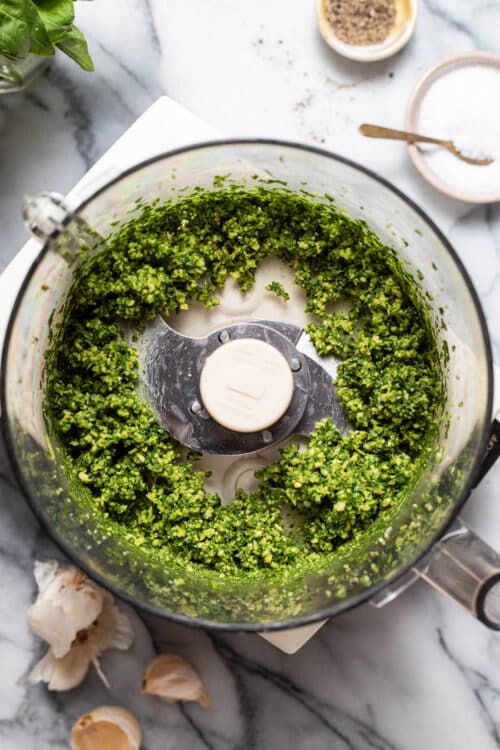
- Pulse. Pulse the basil, garlic, pine nuts and Parmesan in a food processor, seasoning to taste. The consistency should be similar to wet sand.
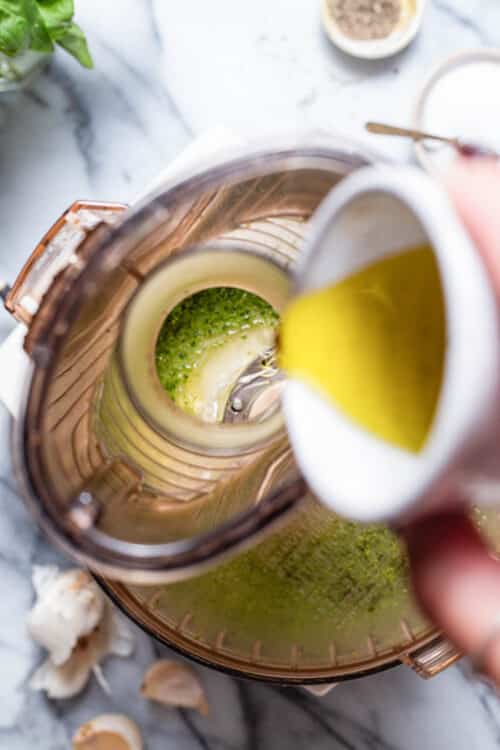
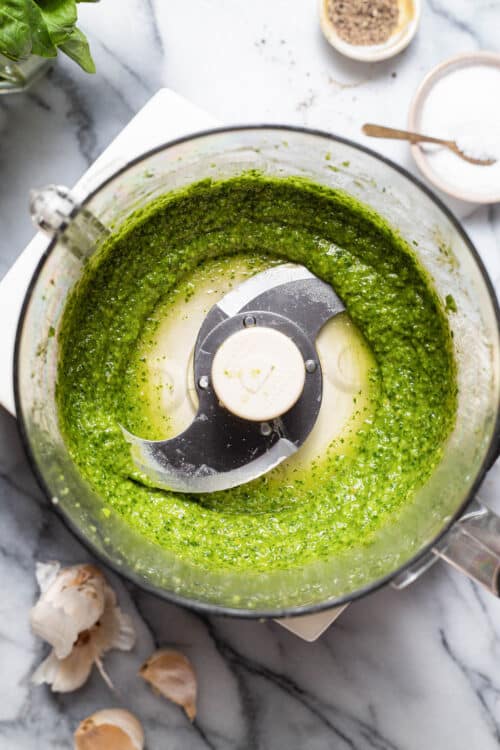
- Emulsify. Slowly add the olive oil with the motor running until smooth and glossy.
- Store. Season as needed and store in the fridge in an airtight container for 1 week or freezer in silicone ice cube trays for 6 months.

How to store and freeze homemade pesto
Airtight container
Pesto can be stored in an airtight container in the fridge for 1 week, adding a thin layer of olive oil on top and covering with plastic wrap.
Ice cube tray
Portion the pesto into silicone ice cube trays, adding a tiny drizzle of olive oil on top to prevent the pesto from turning brown. Cover and freeze until solid; transfer to an airtight, resealable freezer bag up to 6 months. One standard ice cube is about 1-2 tablespoons pesto, the perfect portion for single meals.
Freezer bag
Portion the pesto into plastic freezer bags, squeezing out any excess air before sealing. Lay the bags flat in a single layer in the freezer (this will help them freeze quickly). Label, date and freeze up to 6 months.
More favorited pesto recipes
- Chicken Pesto Kabobs
- Chicken Pesto Pizza
- Creamy Pesto Shells
- Pesto Garlic Knots
- Chicken Pesto Sandwich
Tools For This Recipe
Easy Homemade Pesto: Frequently Asked Questions
Fresh basil is traditionally used for pesto but other greens can be used such as cilantro, kale, mint, spinach, parsley or arugula.
Pesto typically uses pine nuts, which can be very expensive. You can swap out the pine nuts for walnuts, pistachios, hazelnuts, pecans or pumpkin seeds.
Use a hard, aged Italian cheese such as Parmesan or Pecorino. Asiago is also a solid option.
Yes! You can make pesto with a blender or mortar and pestle.
Leftovers can be stored in an airtight container in the fridge for 1 week.
Unfortunately no, homemade pesto cannot be canned. Always refrigerate or freeze pesto for long term storage.
No, pesto is generally not meant to be cooked. Pesto is designed to be a no-cook sauce or fresh garnish, spread or drizzle.
Pesto can quickly turn brown due to oxidation. To keep the pesto vibrant green, add a thin layer of olive oil on top of the pesto when storing.


Easy Homemade Pesto
Ingredients
- 1 cup fresh basil leaves, loosely packed
- 3 cloves garlic, peeled
- 3 tablespoons pine nuts
- ⅓ cup freshly grated Parmesan or Pecorino
- Kosher salt and freshly ground black pepper, to taste
- ⅓ cup extra virgin olive oil
Instructions
- To make the pesto, combine basil, garlic, pine nuts and Parmesan in the bowl of a food processor; season with salt and pepper, to taste.
- With the motor running, add olive oil in a slow stream until emulsified; set aside.
- Store in an airtight container in the refrigerator for up to 1 week or freeze in ice cube trays up to 6 months.


Equipment

Notes
- Always use fresh ingredients. Skip the jarred garlic (or garlic paste) and use freshly grated Parmesan or Pecorino for maximum flavor (and the vibrant green color of pesto).
- Dry the basil. Clean and dry the basil leaves thoroughly. Excess moisture will dilute the flavor of the pesto.
- Toast the pine nuts. For a richer flavor, toast the pine nuts in a dry skillet for 1-2 minutes.
- Make it budget-friendly. Pine nuts can be pricey. Swap out the pine nuts for more affordable nuts such as walnuts, almonds or even sunflower seeds.
- Use EVOO. Because pesto is a no-cook sauce, it is best to use a mild, high quality extra virgin olive oil. The EVOO is a key ingredient here, serving as an emulsifier to bind all the ingredients together.
- Slowly stream the olive oil. This is the secret to creating that thick, glossy, creamy pesto sauce, and will prevent the mixture from separating into a greasy sauce.
- Keep it green. Pesto can brown very quickly due to oxidation. Add a thin layer of olive oil on top of the pesto, covering with plastic wrap, when storing.
- Freeze in ice cube trays. Homemade pesto can keep in the freezer for up to 6 months! Freeze the leftover pesto in silicone ice cube trays with a small amount of olive oil on top (to prevent oxidation), transferring them to an airtight, resealable freezer bag once frozen solid. Toss the cubes (no thawing required) directly into hot drained pasta, soup (such as minestrone), or onto warm roasted vegetables.
Did you make this recipe?
Tag @damn_delicious on Instagram and hashtag it #damndelicious!

I added 2 garlic cloves and an extra tablespoon of pine nuts and the taste was great. Garlicy but still great. Love how easy it was to make and enjoy. Became my favourite pesto recipe 🙂 Thanks for sharing!
I don’t have a food processor, will my mini food chopper work
A blender would actually work better if you do not have a food processor.
Plain olive oil or extra-virgin???
Extra-virgin!
So sad! Just made this recipe with fresh picked basil and MAN is it ever too garlicy — and I LOVE garlic. I want to salvage it but nothing I can do at this point. 🙁 Really haven’t made a bad dish from you — but this one needs some tweaking. Perhaps specifying how much garlic (in teaspoons / tablespoons) rather than by clove?
Off to figure out how to save it …..
I had the same results. Found a similar recipe that had three TIMES the basil with all of the other ingredients the same measure. Live and learn. I will still use it, but it nearly knocked our socks off. Way too much garlic.
Just made this so tasty great recipe
Yummy. Just made it. Very good. Although I put the oil right in , not slowly but it still tasted good. Ty for the recipe.
Today my wife is in bed with the catarrh and esophagitis that I brought home from teaching pre-K students, so I was cooking for one, looking for something savory to put over steamy spaghetti squash strands. Your pesto recipe was delicious, and got more and more tasty as it incorporated in and through the pasta-like squash “noodles.” Thank you.
Making a lot of pesto. Make it and put it in ice cube trays dribble olive oil on top so it won’t turn black and freeze it for 24 hours and put it in a zip lock bag it will keep for a couple of months.
I’m wondering how to determine 1 cup of basil. Do I pack it loosely or dense smashing as much into measuring cup as possible?
Loosely packed.
Just made this pesto and — coming from a garlic lover — I thought 3 cloves of garlic was just a bit overpowering. Added another tablespoon of pine nuts and another 3/4 cup basil and boom! Perfect. Thanks for posting!
Super easy to mix up in Nutra bullet! The taste is spot on. Thank you!
Super easy to mix up in the nutrition bullet! The taste is spot on. Thank you!
Great recipe sally, i love pesto, never thought to make my own.
Simon
It’s great with Almonds, i usually serve on fettuccine with one Tbsp or two of Ricotta cheese
I will be trying this recipe but I have to alter it as my wife is allergic to garlic.
My question is: Is there anything I can use (not onions or shallots) as a replacement or should I simply leave it out? Perhaps some other spices? If so, what?
Thank you.
You can omit the garlic in its entirety.
I have the same problem. I add a little more Parmesan cheese and it seems to help.
I AM ABOUT TO MAKE IT
The 3 cloves of garlic was far too much for my tastebuds in this recipe. Perhaps my cloves were too big as it completely overpowered the recipe and I couldn’t even fix the taste by adding more of the other ingredients to dull down the pungent garlic taste! I think I will try again with just 2 cloves next time
Yes! Your cloves must have been massive – the garlic taste should be very faint.
Due to the change in weather my basil plant was not doing so well. Todays mission was to find the the fresh Parmesan cheese. I found it. I made it. AND OMG!!! DAMN DELICIOUS IT WAS!
I am going to plant three of Basil next year. lol
Thank you,
Yvette
Should I use the cheese fresh or the kraft parmesan cheese?
It is best to use freshly grated Parmesan cheese.
This is so easy and soooo good! I have already made this so many times. I add milk and heat it to make it creamy. Thank you!